Esgarrar means to tear. Not to slice, not to dice — to pull apart with your fingers. The dish is named after the action, which tells you how much the action matters. The peppers and the cod go in as ragged ribbons, because a torn edge holds oil in a way a cut one never does.
Valencia · Serves 4 · 40 minutes, plus resting · Easy
Ingredients
- 3 red peppers
- 150 g salt cod, desalted — see below
- 2 garlic cloves, thinly chopped
- Flaky sea salt
- Extra virgin olive oil, for dressing
Method
- Roast the peppers whole at 200°C until the skins blacken and blister, about 40 minutes in an oven, turning once. In an air fryer, around 15 minutes each side.
- Put them straight into a bowl and cover it. They steam as they cool, which is what loosens the skins.
- Once cool enough to handle, peel and seed them, then tear them lengthways into strips with your fingers.
- Tear the cod into strips of roughly the same size. Combine with the peppers and the sliced garlic.
- Season lightly — the cod brings its own salt — and dress generously with raw olive oil.
- Leave it to rest for at least 30 minutes before serving. An hour is better.
The point of the dish
Once the peppers come out of the oven nothing else is cooked, which leaves the oil to do all the remaining work. It softens the raw garlic, draws the smoke out of the pepper, and rounds off the salt in the cod. That takes time, and it is the only technique in the recipe: you dress it, and then you leave it alone.
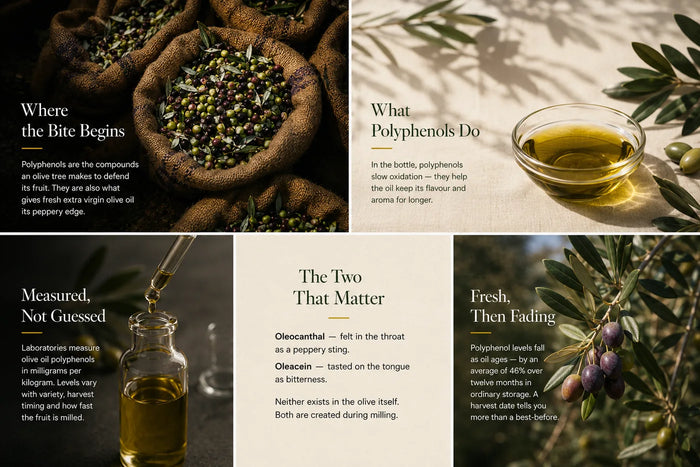
This is also why it is worth using an oil with some bite. A peppery, early-harvest oil holds its own against the salt instead of disappearing under it — the same bitterness and throat-catch that makes such an oil hard to drink neat is what makes it right here. We wrote about where that comes from in Why Good Olive Oil Burns Your Throat.
Be generous. A mean pour leaves you with peppers and cod sitting next to each other. A generous one makes them into a single thing.
A note on the salt cod
Salt cod is the one ingredient that takes planning. Look for it at Spanish, Portuguese or Italian delicatessens, where it is sold either dried in stiff planks or already desalted and frozen. The frozen kind saves you two days.
If you buy it dried, desalting takes 24 to 48 hours depending on thickness. Rinse the surface salt off, submerge the pieces in cold water in the fridge, and change the water every eight hours or so. It is ready when a corner tastes seasoned rather than salty. Pat it dry before tearing.
Esgarraet is traditionally made with cod that has been desalted but never cooked, so buy from somewhere with good turnover.
The pepper and the cod both arrived by sea
This looks like an ancient dish, and in one sense it is not. The red pepper is a New World plant; it reached Spain after 1492 and took generations to move from botanical curiosity to field crop. The cod comes from the North Atlantic, thousands of kilometres from Valencia, and arrived because salting made it the first fish that could travel inland and keep.
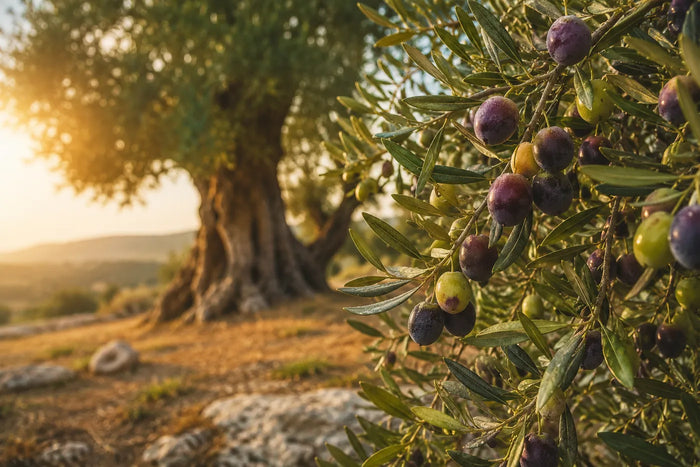
So two of the three ingredients are relatively recent arrivals, brought in on trade routes. The third was already there. Olives have been pressed in this part of eastern Spain for well over two thousand years, and some of the trees standing in those groves today were already old when the first peppers were planted around them.
That ordering is worth holding on to. In most of the Mediterranean dishes we think of as timeless, the headline ingredient is the newcomer and the oil is the constant. Gazpacho was bread, oil, vinegar and garlic long before the tomato. Esgarraet is the same shape: the oil is not what finishes the dish, it is the part that was always there.
It is peasant food, and it was made in the huerta, the irrigated market gardens around Valencia, by people who needed something that could be assembled cold, carried to work and eaten hours later without spoiling. The resting time that we now treat as a technique started out as a consequence of the working day.
From The Raw Mediterranean, the Poveda Olea recipe collection — published here one recipe at a time.
This article is for general information only. It is not medical or dietary advice, and it is not a claim about any specific product.
By Poveda Olea Team · Last updated